A debut rarely manages to be the most praised and the most attacked book of a single season; Aurélie Sandt has done it in under two months. The Inventory of Small Drownings arrived in May with the advance notices publishers pray for — comparisons to the modernists, a sleeve heavy with superlatives — and for a few weeks the consensus held across London, Paris and the German feuilletons alike. Then it cracked, loudly, and the crack has turned out to be more revealing than the praise. Read the reviews now and you are not watching a book being judged. You are watching a literary culture argue with itself, in public, about what it has quietly come to want from fiction.
The novel itself is a formally restless thing, and it withholds the one comfort readers expect first: plot. Across some three hundred pages a narrator who may or may not be Sandt catalogues the moments in a life when she nearly went under — a childhood swimming accident, a marriage, a mother's slow illness — and refuses to narrate any of them straight. Each "drowning" arrives as a list, an inventory of objects, weather, overheard sentences, the temperature of a room. The method is hypnotic when it lands and airless when it doesn't, and the honest thing to report is that reasonable readers disagree, sharply, about the ratio.
Autofiction on trial — again
The first front is the oldest quarrel in contemporary letters: autofiction against invention. Sandt's defenders read the book as a rigorous interrogation of memory and a refusal of the redemptive arc the industry has made all but compulsory. Her detractors read the same pages as a familiar sleight of hand — the author's own life, lightly fictionalised, dressed in difficulty to disguise how little has actually been made. "We have spent fifteen years calling confession courage," one prominent critic wrote, in the notice that turned the tide. "At some point we must ask whether the emperor has run out of clothes to take off."
That is unfair to Sandt, who is plainly doing something more deliberate than confession. But it lands, because it names a real exhaustion — one visible from London to Oslo, wherever a generation of prize-winning fiction has spent a decade mining the self. Readers who once found that mode bracing are beginning to find it airless. Sandt is not the most self-regarding writer of the wave; she is close to the best, and the backlash always chooses its best example, because only the strongest case is worth arguing over.
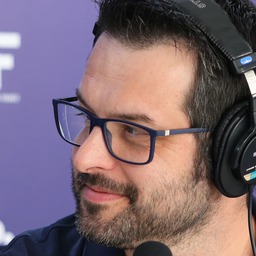
"I did not write a confession. I built a machine for noticing. If a reader mistakes the two, that is a fact about how we have been trained to read — not a fact about the book."
Aurélie Sandt — in a rare interview with Blog DergisiThe second front pits form against feeling, and here the lines blur. The inventory device — the lists, the refusal of scene — is either the book's radical achievement or its fatal coldness, and the same page supports both verdicts. I sit, narrowly, on the warmer side: the accumulation does something no conventional scene can, assembling grief out of grocery receipts and bus timetables until the absence at the centre grows unbearable precisely because it is never named. But the readers who feel locked out are not philistines. Sandt has built a wall and called it a window, and whether you see through it depends less on your taste than on how much patience you carried in.
The argument underneath
Clear away the personalities and a genuine fork in the road appears. One tradition holds that the novel's work is to make you feel — to supply character, story, the warm machinery of empathy. The other holds that its work is to make you notice — to estrange the familiar and refuse the consolations of plot. Sandt has committed, without hedging, to the second, and the ferocity of the response is really a measurement: of how many readers still want the first, and how bitterly they resent being told that wanting it makes them late to their own century. That resentment is not stupid. It is a defence of pleasure against a criticism that too often treats pleasure as suspect.
Which is why the book matters past its own merits. The Inventory of Small Drownings is where a stale, circling argument finally acquired a single text everyone has actually read. My verdict is that it is a flawed and frequently astonishing debut by a writer of obvious, slightly frightening gifts — a book fully worth the fight it started. Read it before you are told whose side to take. You may, as I did, end up uncomfortably on both, which is the most honest place the argument leaves anyone. For more of the season's reading, see our list of ten reads for a summer that counts.